Closing
the loop.
After Just Go launched, the real design work began: iterating the friction-free rate from 50% to 80%, driving Scan & Go to become the highest-adopted retail store app in the US, and improving shrink — all without adding friction back.
Security and delight
were on a collision course.
After the CES launch and national rollout, two competing forces sharpened. Economic pressures pushed for tighter loss-prevention at exit — more scrutiny, more intervention. Meanwhile, the member experience we'd built was working: satisfaction was up and adoption was climbing. Every layer of friction added would trade one win for another. The design work became: prove both can improve simultaneously.
Asset protection wanted more scrutiny. The business needed shrink to come down.
The instinct was reasonable: more checking equals less shrink. But every intervention that stopped a member eroded the trust that made the system work. At launch, 50% of members got no-stop exits. The other 50% still experienced friction — and that number needed to move.
Better AI accuracy would serve both goals, without adding human checkpoints.
Rather than adding intervention layers, we invested in improving the CV model on harder cases: low-cart items, bulk merchandise, and unconventional placement. Better technology would improve shrink recovery and increase friction-free exits. The bet was simple: delight and security move together.
Four systems,
iterated in parallel.
Post-launch design work is often invisible. It doesn't make headlines. But it's where outcomes are built. These are the specific design and system changes that moved the metrics.
| Design Area | What We Observed Post-Launch | What We Changed | Outcome |
|---|---|---|---|
| CV Model | 80% accuracy at pilot. Large carts, bulk items, and unconventional placement caused misses. Friction-free rate held at 50%. | Iterative model retraining with real club data. Expanded training sets for high-shrink SKUs, oversized items, and low-cart placement. | Friction-free: 50% → 80%+ |
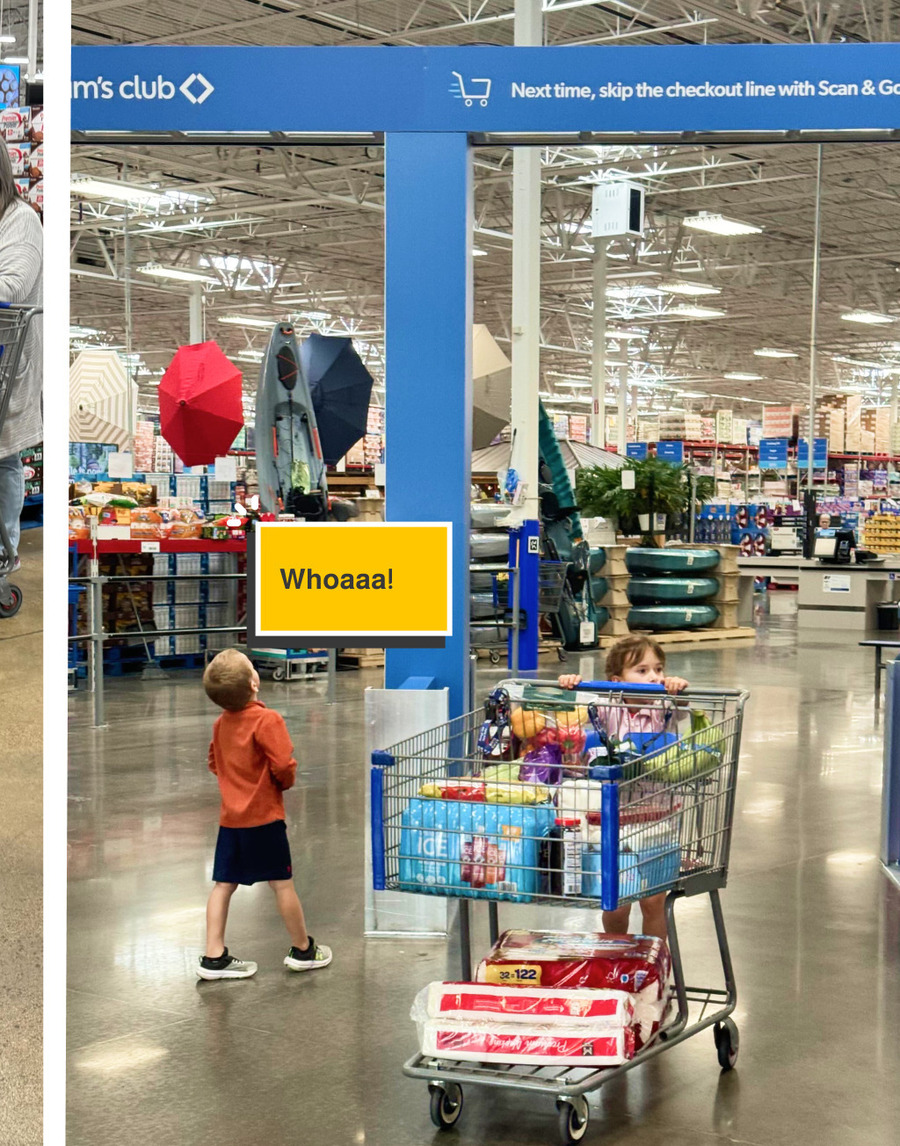
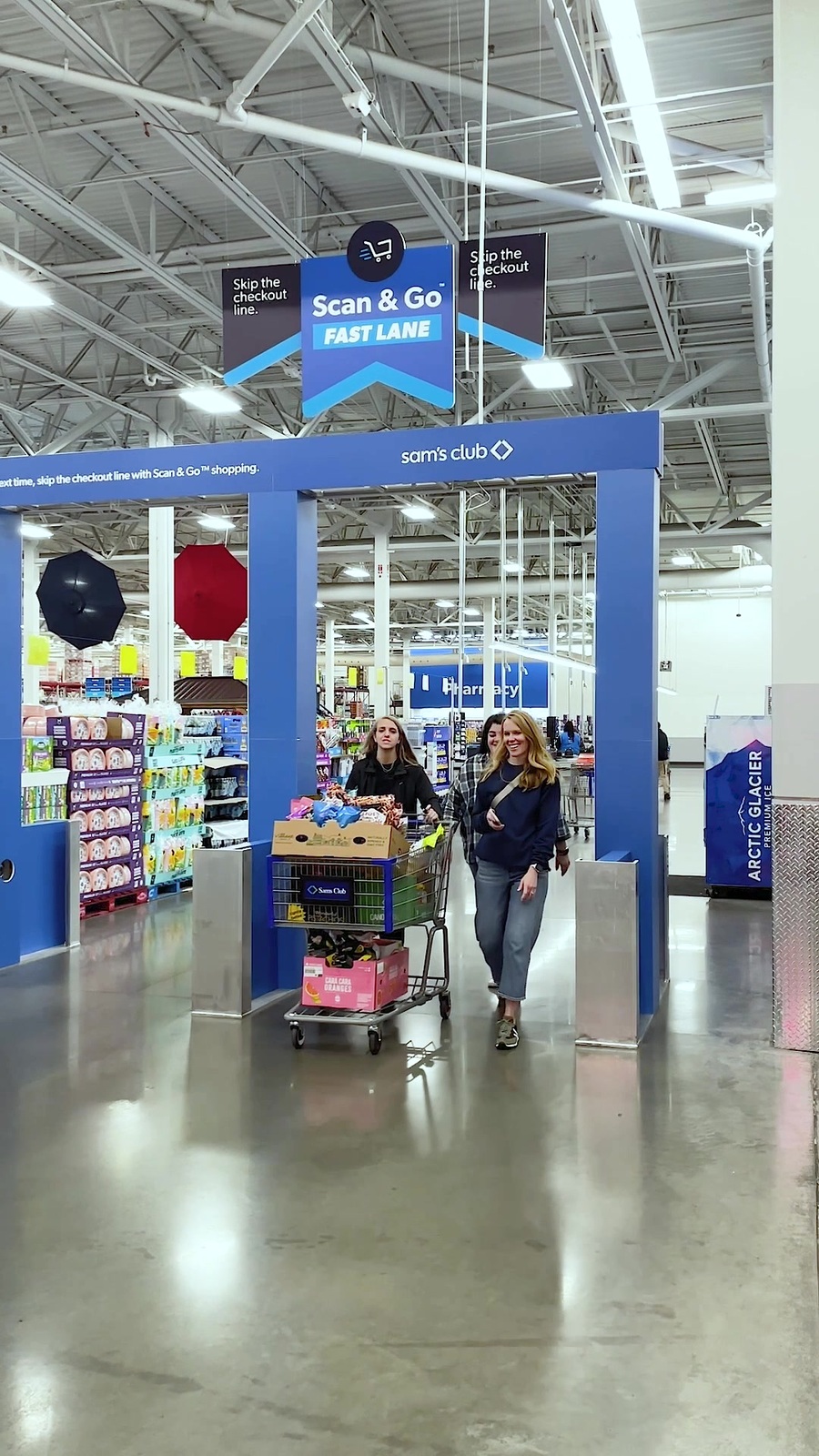
| Exit Arch Hardware | Camera angle and distance created blind spots for specific cart configurations and varied across club formats. | Iterated arch geometry at Clubhouse, adjusted the camera array, and validated against CAD drawings for all 600 club layouts. | Consistent accuracy across all formats |
| App Onboarding | Members were unaware of the no-stop exit benefit. Traditional checkout users were not converting. Adoption plateaued at 24%. | Added contextual prompts at key journey moments plus a post-exit “next time, skip the line” nudge for traditional checkout users. | Adoption: 24% → ~40% |
| Member Trust Signals | Some members hesitated at the arch. Privacy concerns from earlier research resurfaced in live clubs. | Added clear visual confirmation states on the arch and messaging that reinforced confidence instead of compliance, with legal integrated into UX. | OSAT: 63 → 90+ |
The system improved
without adding friction back.
Three systems improved
by one design arc.
Member experience: from the weakest link to the strongest.
The exit — once the lowest-rated step in the Scan & Go journey — now matches the satisfaction of the app itself. Members describe the no-stop exit as magical and effortless. The promise of “skip the line” is finally fully delivered.
Loss prevention: better outcomes without adding friction.
The system designed around member trust now recovers unpaid items at 3× the rate of manual human scanning. Better AI, not more human intervention, proved to be the path to both shrink reduction and member delight.
Adoption: friction-free exit unlocked digital checkout at scale.
A seamless end-to-end journey — from scan to no-stop exit — removed the last barrier to adoption. Sam's Club Scan & Go is now approaching 40%, the highest adoption rate of any retail store app in the United States.
The arch improved
with every iteration.
Camera geometry, arch clearance, and distance parameters were all refined post-launch across 600 club layouts. What launched at CES was version one. What members experience today is the product of continuous design iteration.
Scale that
no one else matched.
The differentiator wasn't budget or headcount. It was the design premise: start with the member experience, iterate on the hardest constraints, let trust drive both satisfaction and security. That bet paid off across every dimension simultaneously.
We've again raised the bar on convenience by helping shoppers bypass the line at exit.
exit rate
adoption
score
vs manual
What iterating at scale
actually teaches you.
The launch is not the product.
50% friction-free at launch was the start, not the finish. The 30-point improvement to 80%+ came from iteration, not the original build.
Delight and security compound together.
Every iteration that improved member trust also improved shrink recovery. These are not competing goals — they are the same design challenge viewed from different angles.
Digital adoption follows physical experience.
The biggest unlock for Scan & Go adoption wasn't in-app design — it was solving the physical exit. The end of the journey was the key to the beginning.